How to Choose the Right LED Power Supply for Channel Letters
By PoliLED Team · Product Support
Match the driver to the LED load
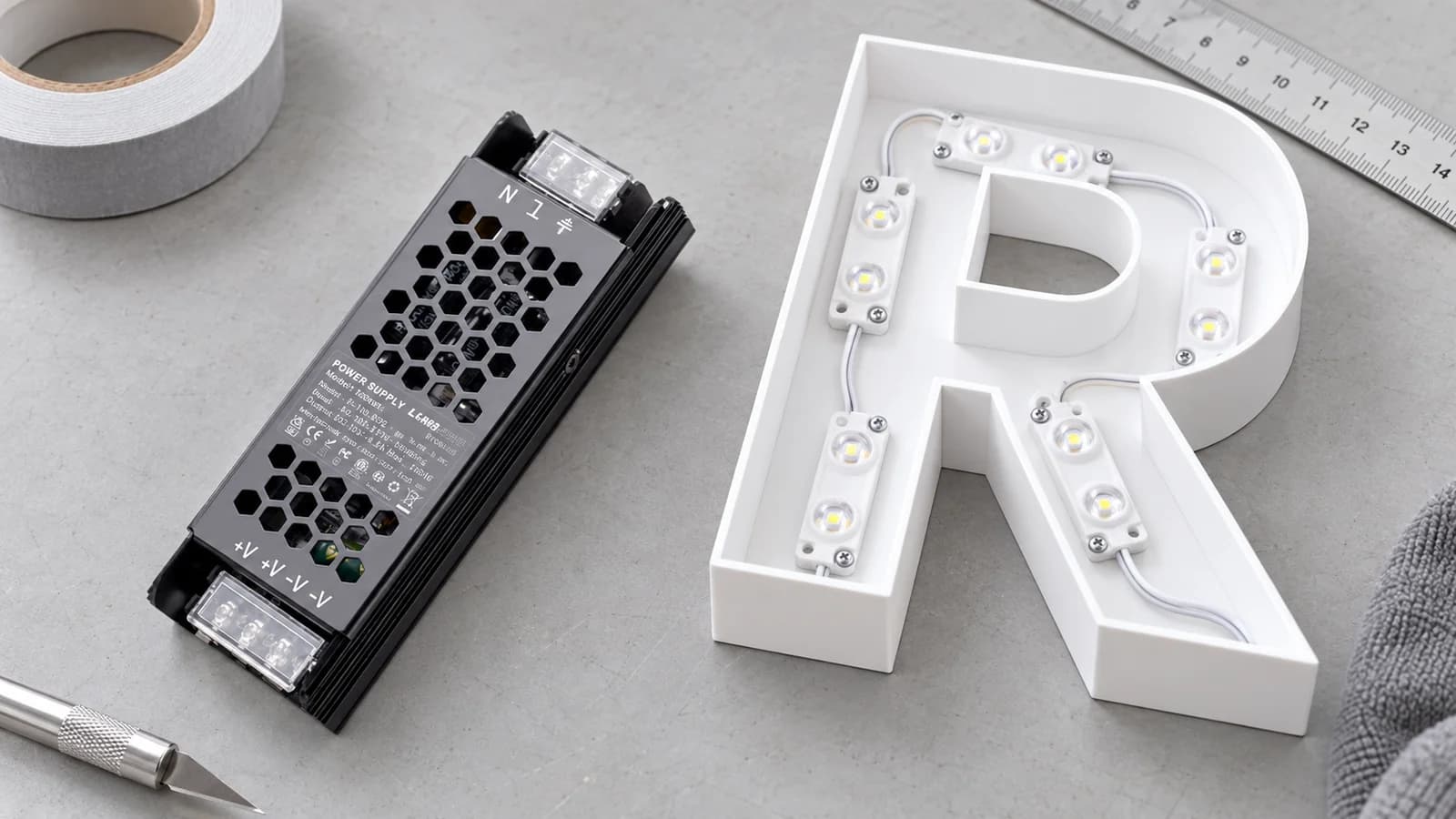
Read the exact module or strip datasheet. A constant-voltage load needs a compatible constant-voltage supply; a constant-current load needs the specified current and voltage range. A voltage label alone does not establish compatibility. Compare the connection diagram with the input power available at the installation.
Separate watts per metre from total watts
For strip rated in W/m, multiply that rating by the installed length in metres. For modules rated in watts per module, multiply by the module count. Add the loads sharing each supply. A per-metre rating is not the total power of a reel.
For example, 5 metres at 9 W/m represents a nominal 45 W LED load. That calculation does not select a driver by itself. Check tolerances, permitted run lengths, cable requirements and operating conditions for the actual product.
Use the model’s operating limits
Compare the output rating and derating curve at the expected temperature and input voltage. An 80% loading target is not universal: MEAN WELL states that some LED drivers support full rated load within specified case-temperature limits. Follow the exact model’s instructions and the designer’s requirements; a fixed percentage does not guarantee longer life.
Check controls and mounting
For dimming or colour-changing LEDs, verify compatibility between driver, controller and load. Compare per-channel controller limits with each connected load. Plan wire size and placement from the equipment instructions. Matching voltage alone does not resolve excessive cable runs or voltage drop.
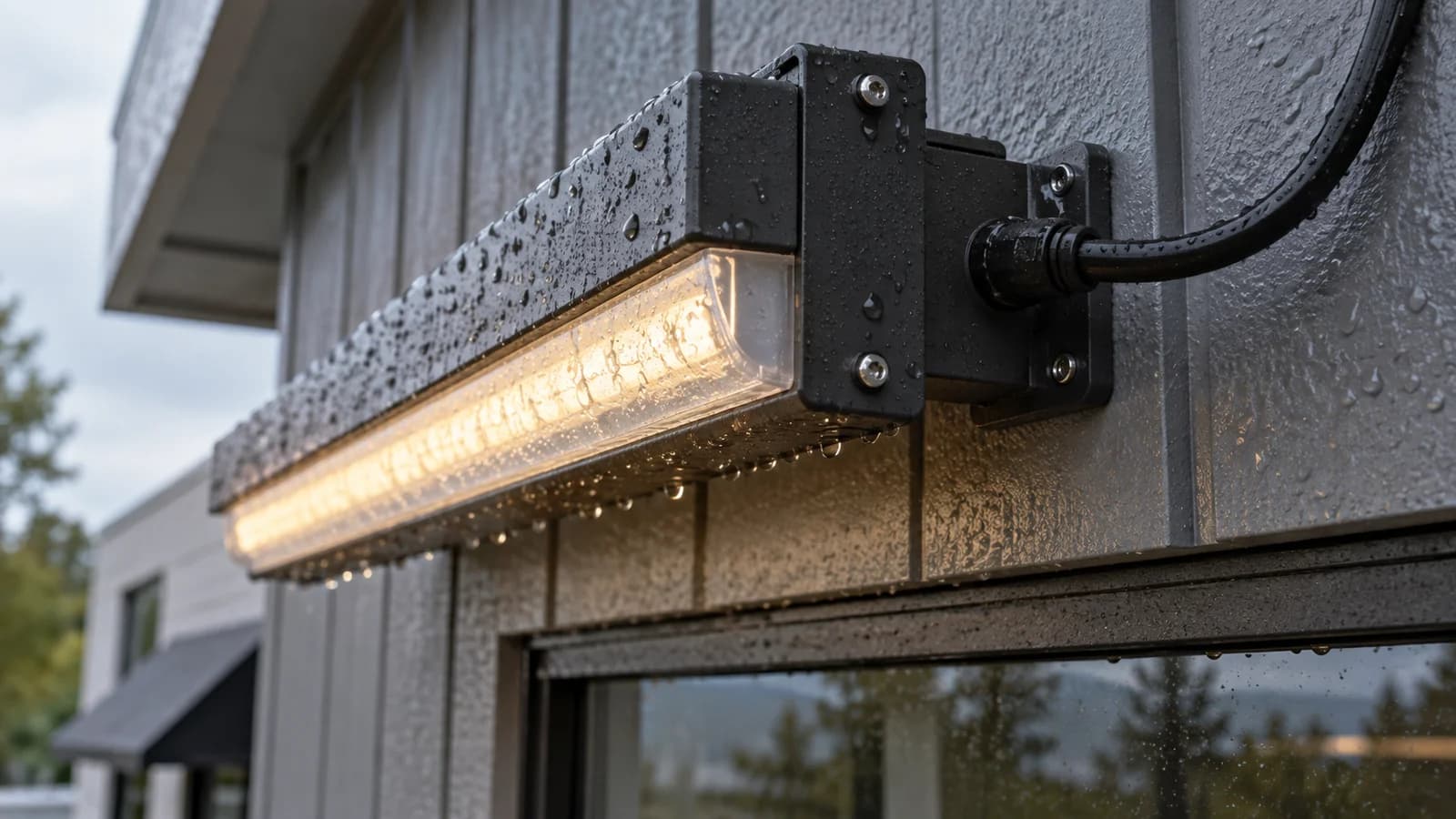
Outdoor use requires suitable equipment, cable entries and mounting. An IP number describes enclosure testing; confirm the permitted environment for the whole assembly.
Verify sign-system documentation
A component’s certification does not certify the finished sign. UL’s programs cover signs and components with conditions of use. The fabricator and installer should verify the system documentation and inspection requirements.
Prepare your component list
Bring the LED SKU or datasheet, installed length or module count, supply voltage, control method and mounting details. PoliLED’s Doral and Dania Beach showrooms can help compare available products. Lighting design and installation inquiries start through our contact form; scope is confirmed in the proposal.
Need help choosing the right product?
Our technical team can help you spec the correct components for your specific application.
Contact Our TeamShare this article