POLILED
Product Guides5 min read·February 27, 2026

5 Things to Look for When Buying LED Modules for Signage

By Poli LED Team · Technical Staff

💡

The Real Cost of Cheap LED Modules

When you're quoting jobs and trying to keep material costs down, it's tempting to reach for the cheapest LED modules available. The problem is that the cost of a callback -- pulling letters off a building, replacing modules, repainting faces -- almost always exceeds whatever you saved upfront. Here are the five things that actually matter when evaluating LED modules for channel letter and cabinet sign work.

1. LED Chip Quality

The chip is the heart of the module. Tier-1 manufacturers -- Epistar, Osram, Cree, Samsung, and Nichia -- produce chips with consistent performance, published datasheets, and proven longevity data. No-name chips from unknown fabs may look identical on paper but degrade rapidly under the thermal stress of enclosed channel letters.

What to look for: the module spec sheet should identify the chip manufacturer. If it just says "high-quality LED chip" with no manufacturer listed, that's a red flag. Also check the luminous efficacy -- a quality module should deliver at least 80-100 lumens per watt. Below that, you're generating more heat than light.

2. Color Consistency

This is the most visible quality issue in a finished sign. If two letters on the same word look like slightly different shades of white, your customer will notice immediately.

- CRI (Color Rendering Index): For most commercial signage, you want CRI ≥ 80. For retail or food service where product color accuracy matters, spec CRI ≥ 90. - CCT Tolerance: Color temperature (measured in Kelvin) should be consistent across the entire module order. Look for ±200K tolerance at minimum. Better suppliers will guarantee MacAdam ellipse binning -- a tighter color consistency standard. If you're buying 3000K warm white modules, all modules should be 3000K ± 150K, not ranging from 2700K to 3300K. - Batch consistency: Always try to source all modules for a job from the same production batch. Keep batch records if your supplier provides them.

3. Weatherproofing

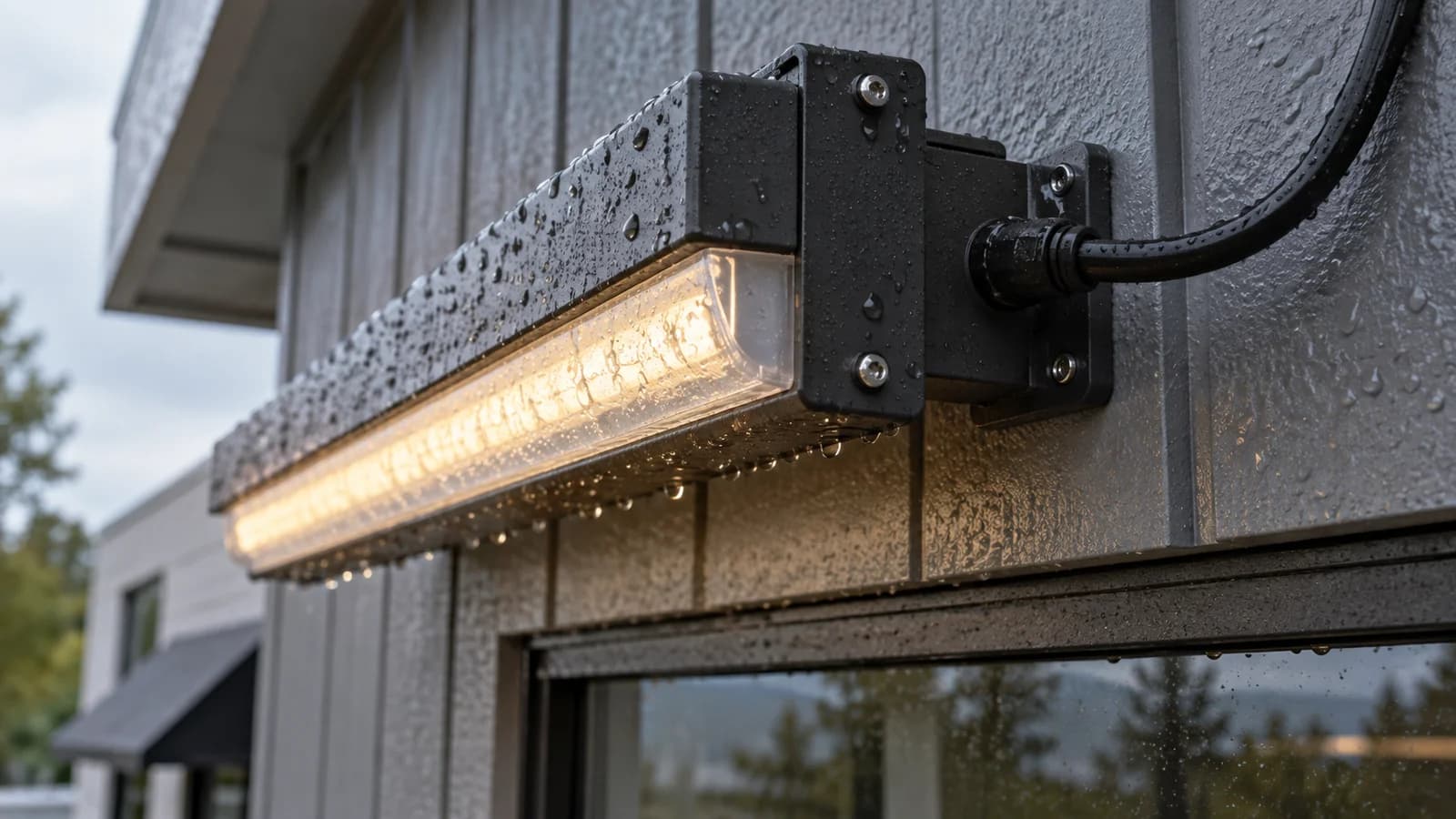
For any outdoor application -- channel letters, cabinet signs, monument signs -- IP65 is the minimum acceptable rating. This means the module is dust-tight and protected against water jets from any direction.

Beyond the IP number, pay attention to the potting compound quality. Good modules are filled with a clear or white silicone gel that fully encapsulates the LED and resistors. Poor potting uses a harder epoxy that cracks over thermal cycles, allowing moisture intrusion. Flex the module gently -- quality potting holds without cracking.

For high-humidity or coastal environments (common in South Florida), IP67 modules with silicone potting are worth the small price premium. We've seen IP65 epoxy-potted modules fail within a year in Miami installations.

4. Certifications

Commercial signage in the U.S. is subject to electrical inspection. Modules should carry:

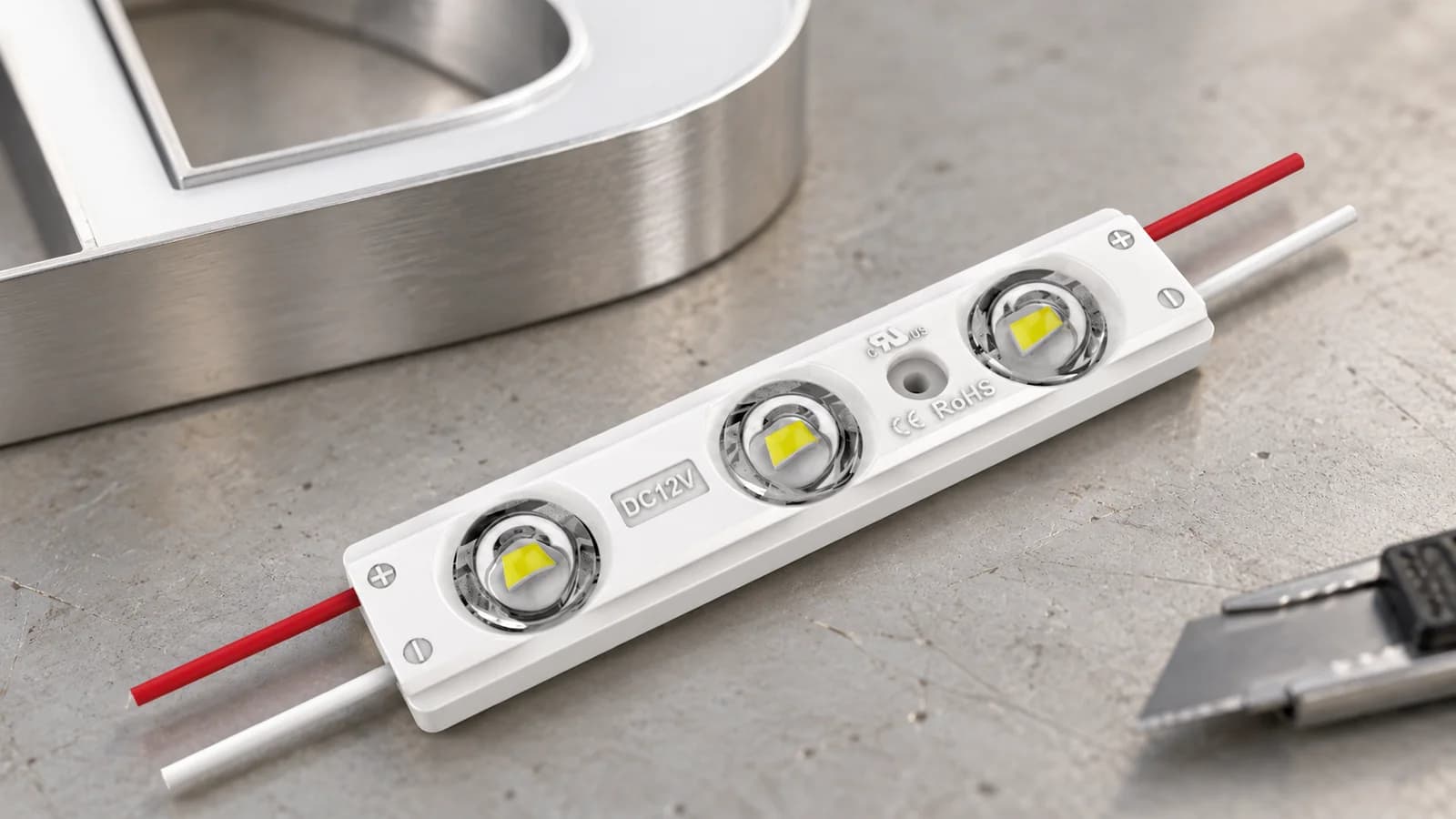
- UL or ETL Listed: Required for commercial installations in most jurisdictions. Look for the actual mark on the module or its spec sheet, not just marketing language. - CE Marking: Required for export to the EU and a general indicator of electromagnetic compliance testing. - RoHS Compliant: Indicates lead-free manufacturing. Required for legal sale in the EU and increasingly expected by U.S. commercial customers.

Ask your supplier for certification documentation. A reputable supplier will have it immediately available. If they can't produce it, walk away.

5. Dot Pitch and Viewing Angle

The visible "hot spots" and uneven illumination that plague cheap signage installations come down to module spacing and viewing angle.

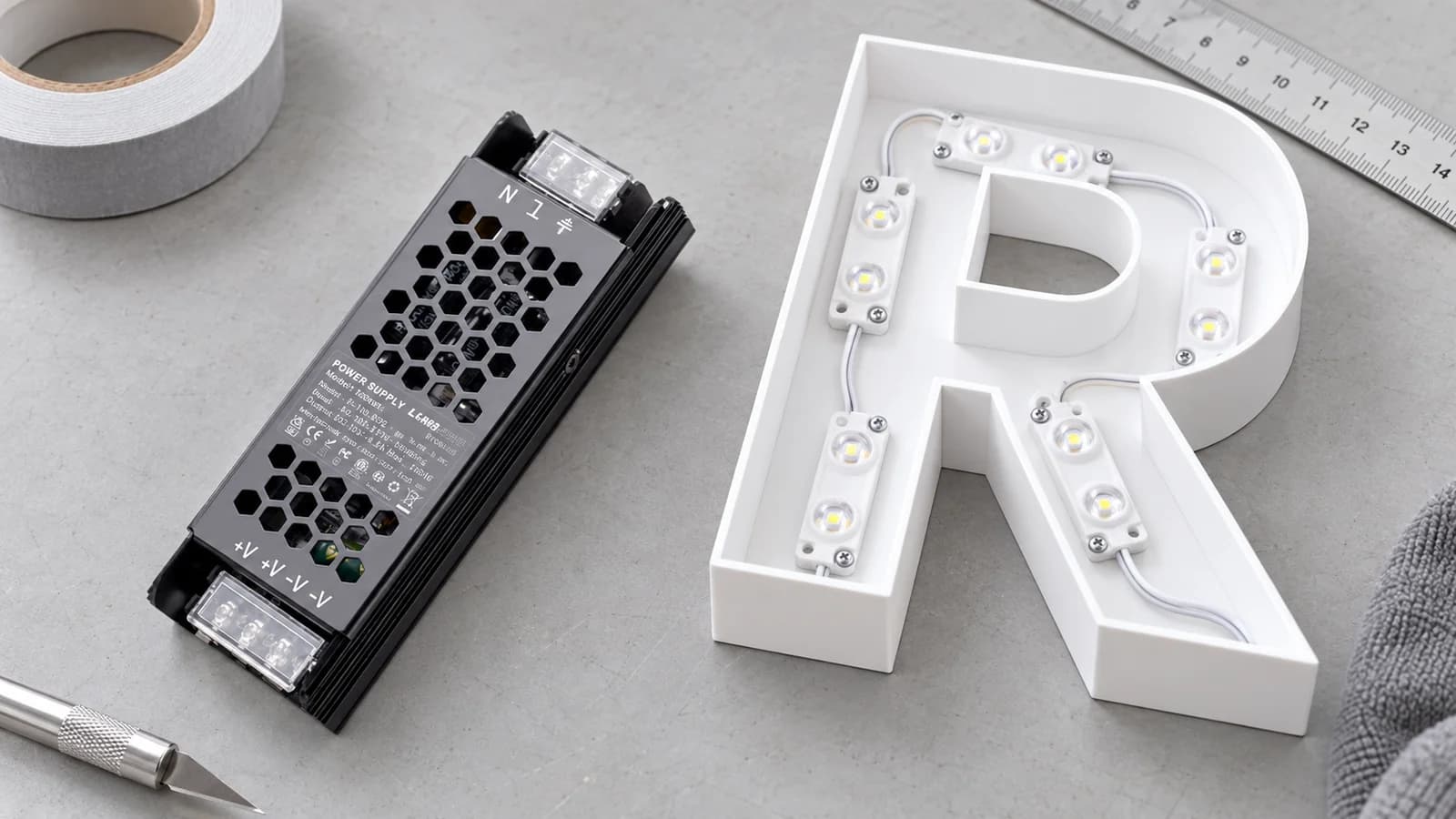
- Viewing angle: Quality modules emit light at 120° or wider. This wide spread ensures the LED light blends before reaching the letter face, eliminating bright spots directly over each module. - Dot pitch (module spacing): The correct spacing depends on the face depth of the letter. A general rule: the module spacing should not exceed the face depth. 25mm face depth = 25mm maximum module spacing. Deeper letters allow wider spacing; shallow letters need tighter spacing. - Letter face material: Thinner acrylic (3mm) requires more modules spaced closer together than thicker 6mm acrylic, which diffuses light better.

Bottom Line

Buy from suppliers who can provide chip manufacturer, certifications, potting specs, and batch records. At Poli LED, every module we stock comes with full documentation and has been tested in South Florida conditions. When in doubt, order a sample run, install it in a test letter box, and evaluate brightness uniformity and color before committing to a full job lot.

Need help choosing the right product?

Our technical team can help you spec the correct components for your specific application.

Contact Our Team

Share this article